
When it feels difficult talking to teens, there is a better way forward.
When conversations feel hard, you don’t have to figure it out alone.
Lighthouse Conversations mini-guides will help you to:
Stand strong without taking over, pushing, or persuading
Develop and maintain a positive relationship through respectful, empathic communication
Reduce conflict and anxiety by fostering understanding, trust, and collaboration

Lighthouse Conversations mini-guides are for those who want to reach teens. They are:
Brief, specific and easy to use in everyday life.
A safe way to have the conversation - even when you are feeling unsure.
Designed for real life situations, when emotions run high.
Reduce conflicts and increase understanding – both ways.
Supportive for your teen without the added pressure.
They are not:
Diagnostic manuals
Quick fixes or ready-made solutions
Checklists for “doing the right thing”
The mini-guides focus on how to talk to your teen, while strengthening your relationship even when things are tough.
Who the guides are for
For parents, guardians, foster parents, and other safe adults who are committed to supporting teens. They are especially helpful if you:

Notice that your own worry sometimes takes over
Find yourself jumping quickly to solutions
Feel unsure of what to say
Worry about saying the “wrong” thing
Want to support your teenager without damaging trust
Want to feel more comfortable in difficult conversations
Believe that building relationships is part of the solution
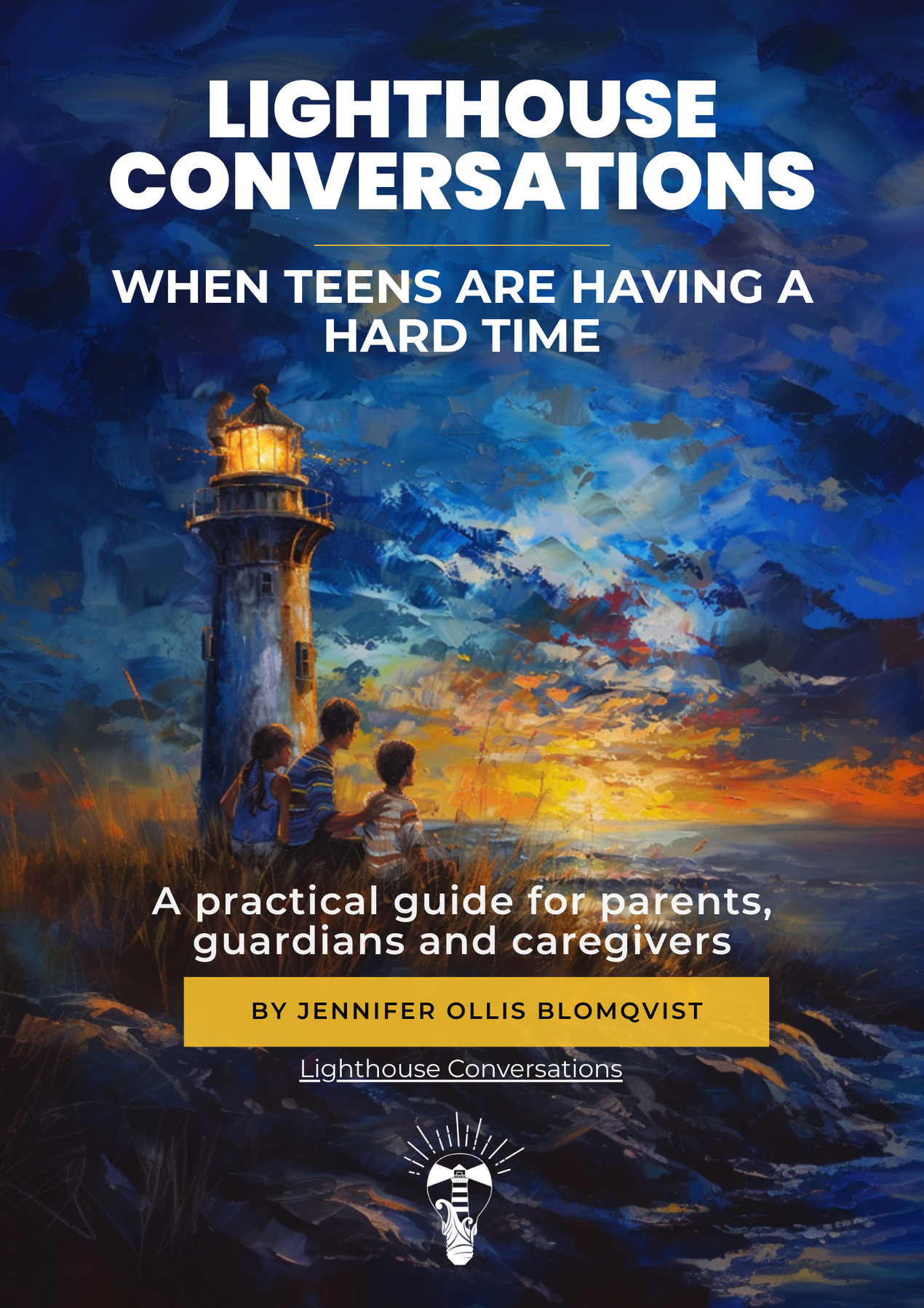
Lighthouse Conversations: When Teens Are Having a Hard Time
A starting point when something feels off, but you’re not sure what or how serious it is.
Lighthouse Conversations: When Teens Are Having a Hard Time by Jennifer Ollis Blomqvist is a practical, compassionate guide for parents, caregivers, and professionals who want to support teens through anxiety, low mood, overwhelm, or emotional struggles—without damaging the relationship. Using the powerful Lighthouse metaphor, this guide introduces a simple, evidence-informed framework (Explore–Offer–Explore) that helps adults listen with empathy, avoid common communication traps, and support change without pressure. Grounded in Motivational Interviewing (MI) theory and principles, it offers clear tools to help teens feel seen, heard, and understood—while empowering adults to stay steady, calm, and connected, even in the storm.

A very practical guide. My biggest take-away is that I don't have to instantly come up with solutions to fix my teen's problems. I also learned how my good intentions may not always be the best method of action. I just need to remain a present and reliable source for my teenager - the image of the lighthouse is a good reminder of this point.
Felicia, parent of two teen boys
This guide has helped me and my husband so much in our communication with our teenagers. Simple and straightforward tips that make it easy to understand. All parents of teenagers should have it.
Anna Larsson, parent of two teens
Each guide focuses on a specific storm, while keeping the same stable Lighthouse stance.
Future guides in the series are:
Worry and anxiety (coming soon)
Low mood or depression (coming soon)
Self-harm and cutting behaviour
Addiction and substance use
Risk-taking and criminal behaviour
About the author
Jennifer Ollis Blomqvist is the author of Lighthouse Conversations and works with parents, caregivers, and professionals to support meaningful, respectful, change conversations with teens. Her work is grounded in empathy, curiosity, and evidence-based communication that protects relationships while supporting change.

Photo credit: Arkadia Foto
Why is the Lighthouse Conversations approach different?
Lighthouse Conversations is built on a simple but powerful idea that:
Teens don’t change because we convince them.
They change when they feel understood, respected, and capable.
These guides help you to:
slow conversations down
reduce power struggles
listen in ways that lower defensiveness
support responsibility without control
stay connected even when you disagree